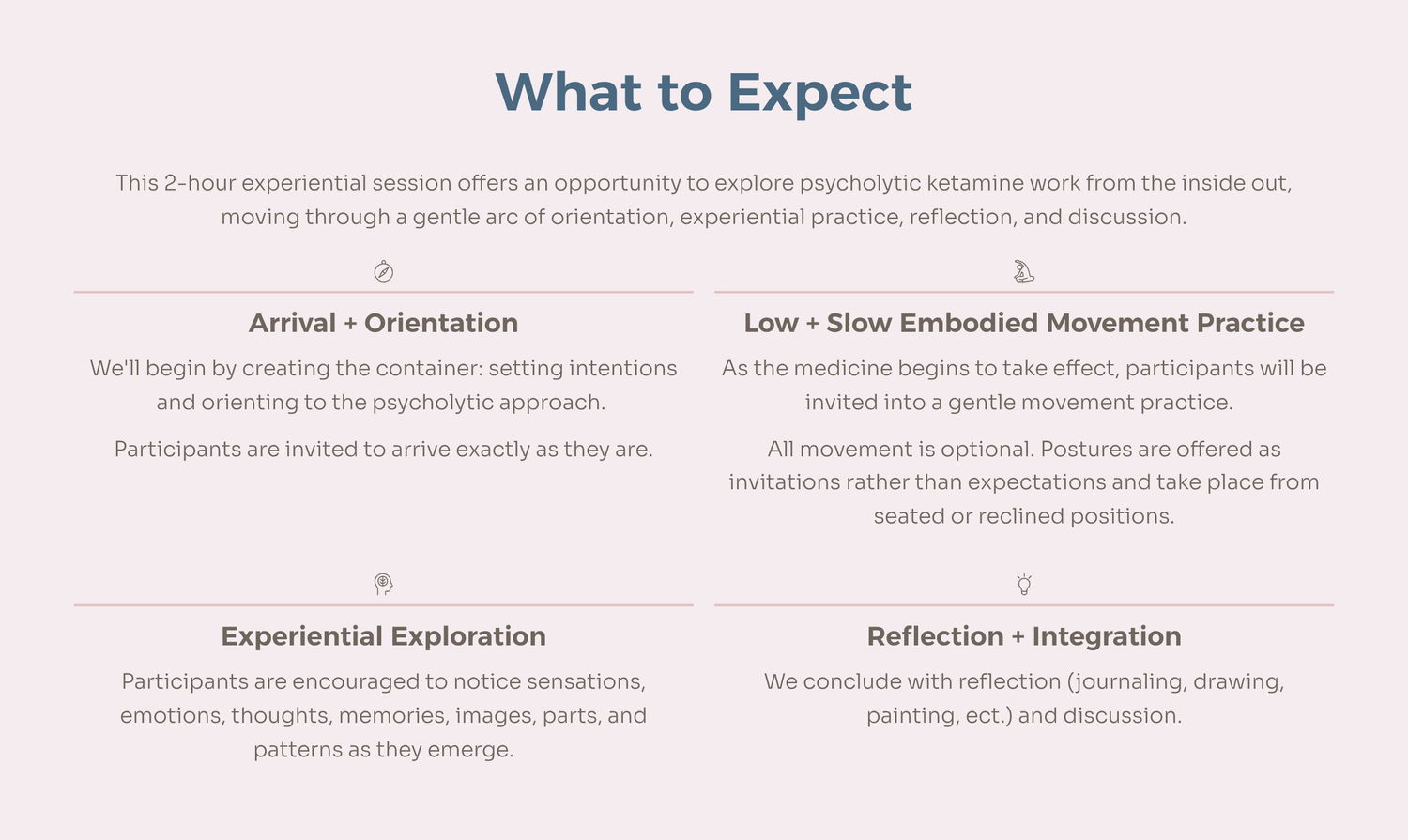

A Psycholytic dose can range from 15-200mg (sublingual). Feel free to refer to this Psycholytic Dosing Assessment Tool to support a conversation with your prescriber about your dose.
*Integrative Journey Modern Psychotherapy co. does not prescribe medication or recommend specific dosing instructions. If you need a referral for a prescriber, please let us know and we will get that process started with you.
** NBCC Credit is not available for this offering
Register for the experiential here:
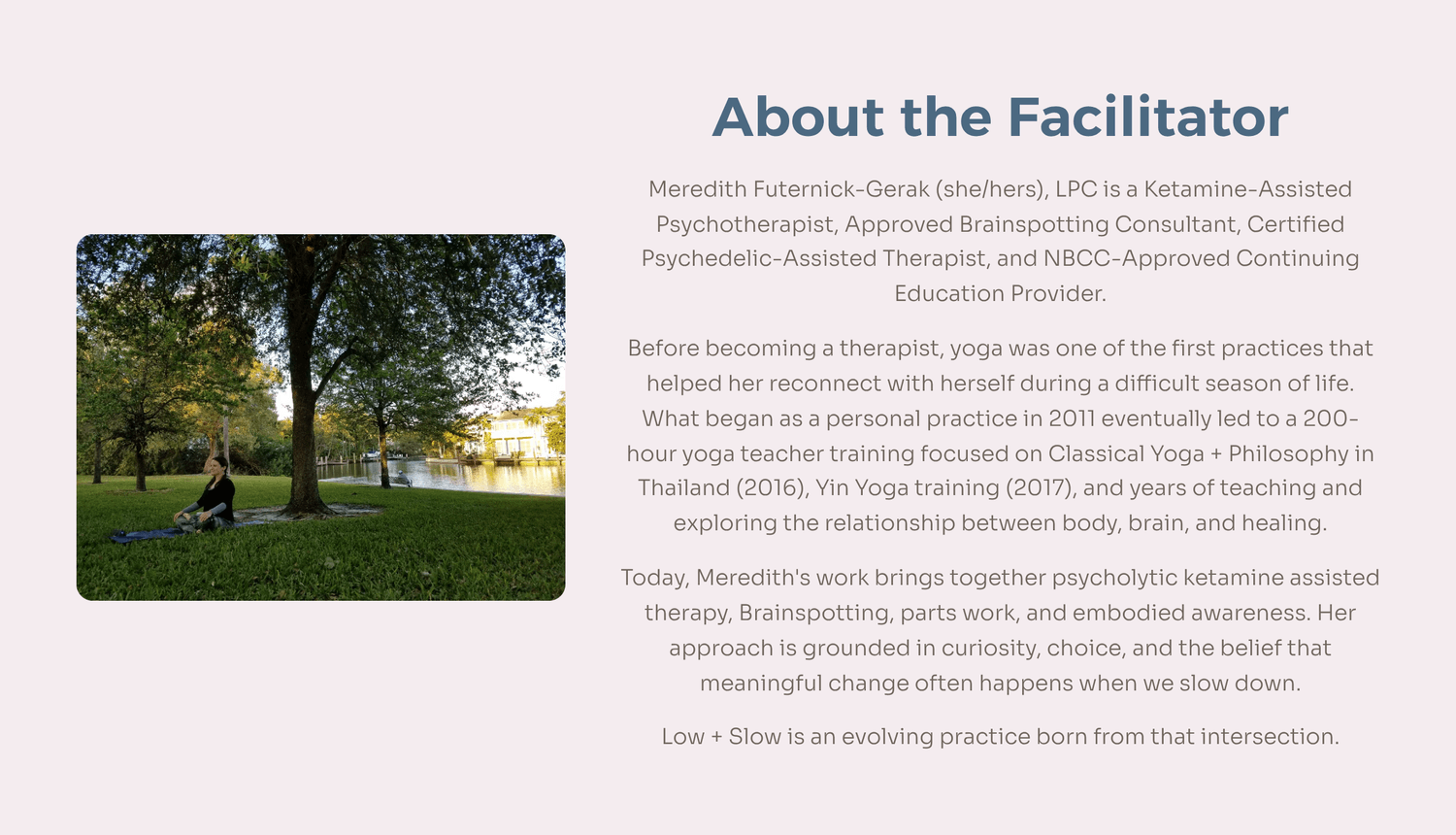
Meet Meredith Futernick-Gerak (she/hers)

I’m a therapist, educator, and consultant specializing in ketamine-assisted psychotherapy (KAP), psycholytic approaches, Brainspotting, and parts-informed, brain-body work. I support clinicians who want to practice this work with depth, integrity, and nervous-system wisdom without losing themselves in rigid protocols or overwhelm.
My commitment to KAP is personal.
I came to ketamine treatment first as a client following a traumatic life event. What I experienced was ketamine administration without therapy, preparation, or integration. Luckily, I had an established relationship with my own therapist and prior experience with altered states. It haunted me to think that folks in the rooms next to me were left without a supportive container to lean into; believing that this is what trauma treatment should look like.
That experience stayed with me.
I knew how vulnerable altered states could be and how much relational safety, pacing, and attunement actually matter. It’s what drove me to pursue advanced training, including certification through the Integrative Psychiatry Institute (IPI), and to fundamentally re-shape how I practice.
My work focuses on frameworks that are:
trauma-informed and non-pathologizing
relational and client-led
grounded in brain-body and parts-based methodologies
thoughtfully integrated across KAP preparation, dosing, and integration sessions
As KAP continues to evolve I see my role as helping clinicians bridge the gap between theory and practice by offering practical frameworks, language, and support so this work can be done ethically, sustainably, and with care.
I’ve been on both sides of this work and everything I offer comes back to this belief:
Both clients and clinicians deserve to feel held, supported, and oriented in this work.
IntegrativeJourneyLearning.com
Journey Clinical Referral Form