Body awareness is not a prerequisite for healing.
'Noticing What Is Here' offers a non-pathologizing way to explore a range of brain-body experiences without forcing awareness, assigning meaning, or requiring yourself to feel differently.
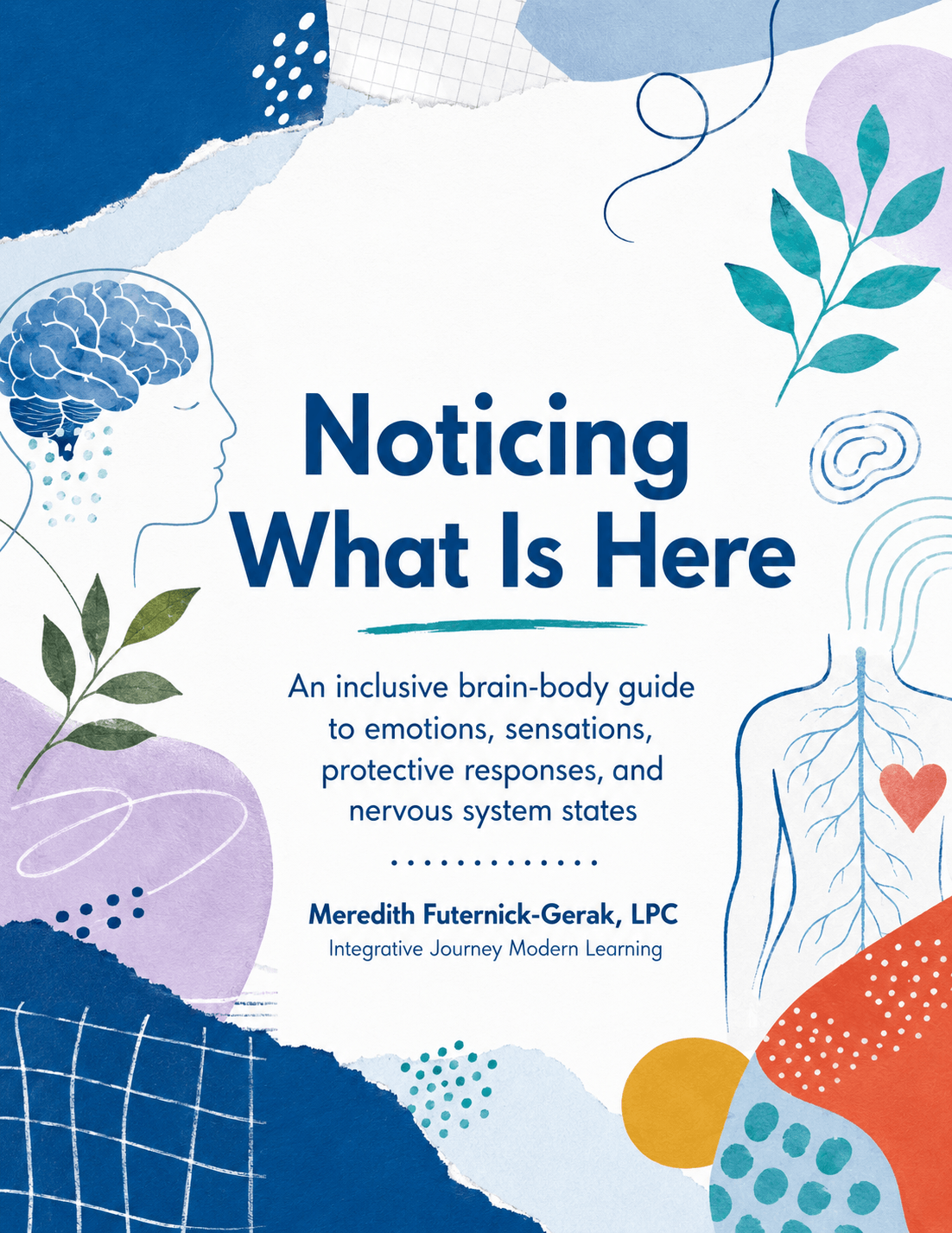
I created this guide for anyone who has ever felt unsure about what they notice, overwhelmed by what they notice, or unable to access the kind of body awareness that so many therapeutic practices seem to expect.
Inside the guide:
An overview of hyperarousal, hypoarousal, and overlapping protective responses
Emotion, Sensation & Nervous System Wheel
Language for experiences such as fight, flight, freeze, fawn, shutdown, collapse, connection, and uncertainty
Optional prompts for noticing what is present without forcing meaning
The guide draws from neuroexperiential, polyvagal-informed, somatic, and trauma-informed perspectives while recognizing that no single framework can fully explain a person’s experience.
This resource may be supportive if…
Body-based language sometimes feels inaccessible, confusing, or overwhelming
You notice thoughts or emotions more readily than physical sensations
Numbness, blankness, uncertainty, or disconnection are part of your experience
You want language for activation without labeling it as “good” or “bad”
You are a clinician seeking a more inclusive way to explore brain-body experiences with clients
You can use this guide to notice:
What is present
What is absent
What feels clear
What feels difficult to name
What you do not want to explore right now
What might offer a little more choice, support, space, or permission
“I don’t know,” “nothing,” and “I don’t want to notice this right now” are all valid responses.
This resource is intended for educational and reflective purposes. It is not a diagnostic tool, medical advice, psychotherapy, or a substitute for individualized care.
Noticing What is Here
Free Resource